
Understanding Ductable AC Systems: High-Static Pressure Engineering, Air Delivery Dynamics & Villa Applications
A comprehensive technical examination of how ductable ac units utilize concealed blowers, galvanized duct networks, and multi-zone diffusers to provide whisper-quiet climate control.
When architects and MEP engineers design elite residential villas, luxury townhouses, and high-end commercial spaces, the visual clutter of standard wall-mounted split units is rarely acceptable. Property owners demand immaculate interior ceilings free of bulky plastic chassis while still requiring absolute protection against intense summer heat.
This is where a ductable ac system—often referred to as a concealed ducted split or central ducted air conditioner—becomes the definitive cooling choice. By positioning the heavy fan coil unit entirely within false ceiling cavities and distributing chilled air through customized ductwork, ductable units merge invisible aesthetics with robust thermodynamic performance. This technical guide explores the core engineering principles, static pressure dynamics, and installation parameters of modern ductable cooling units.
How Ductable AC Systems Operate: The Closed-Loop Air Circuit
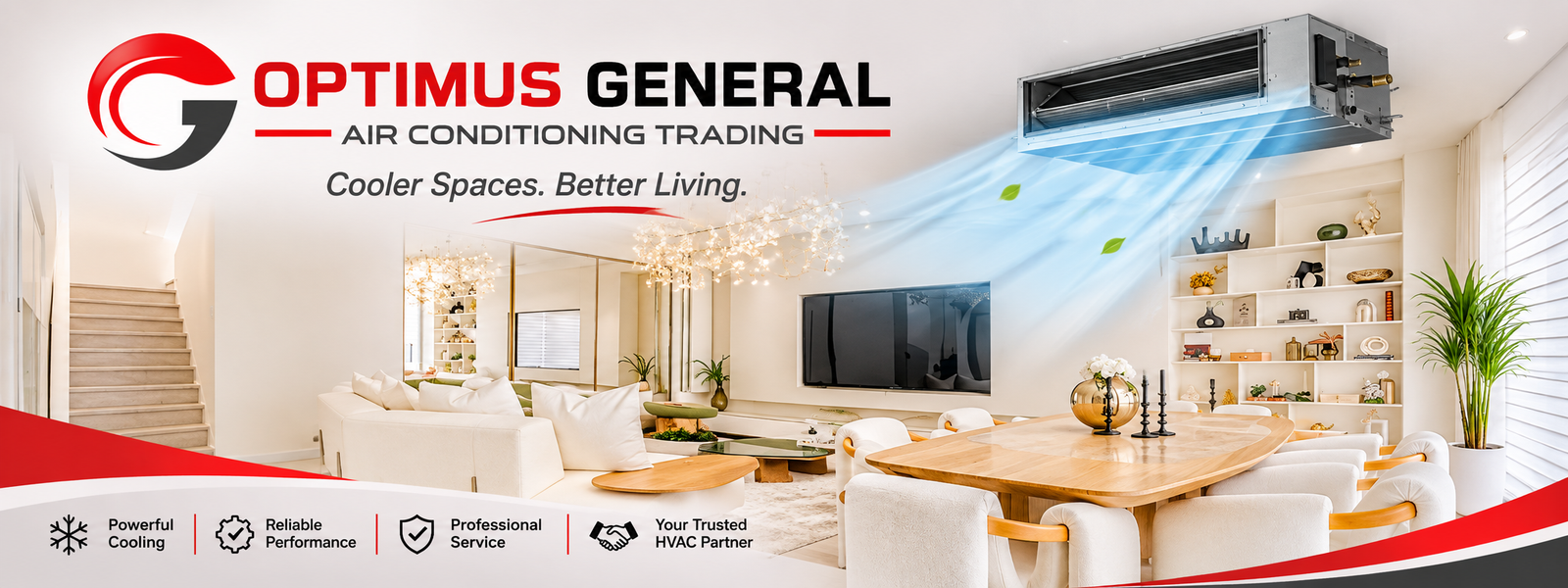
Unlike standard air conditioners that blow air directly from an exposed room unit, a ductable setup operates on a sophisticated closed-loop network. Warm indoor air is drawn upward through a ceiling return air grille into a filter box, passing across the chilled expansion coil of the concealed indoor unit. Once cooled and dehumidified, the air enters the blower assembly, which forces it outward under controlled pressure into a main galvanized steel trunk.
From the main trunk, the airstream splits into multiple branch lines feeding individual rooms, terminating at architectural linear slot diffusers or supply grilles. This continuous cycle ensures that every square foot of an expansive living area or master suite receives balanced cooling without drafts or hot spots.
Key Engineering Parameters of Ductable AC Units
Selecting and commissioning a ductable cooling system requires evaluating specific mechanical metrics that govern airflow behavior and structural integration:
| Engineering Metric | Technical Significance | Standard Operational Range |
|---|---|---|
| External Static Pressure (ESP) | Measures the blower fan’s ability to overcome duct friction and push air through long branch runs | 30 Pa to 150 Pa (Adjustable digital static control) |
| Indoor Chassis Profile | Vertical height of the concealed fan coil unit, determining minimum false ceiling drop requirements | Ultra-slim profiles starting around 240 mm |
| Airflow Volume (CFM) | Cubic feet per minute of conditioned air circulated through the room diffusers | 600 CFM to 2,000+ CFM depending on tonnage |
| Acoustic Sound Power | Measures operating noise emitted into the living space through ceiling diffusers | Dampened down to a quiet 22–26 dB(A) |
Why Static Pressure Balancing Matters in Ductable Installations
One of the most frequent challenges in large ductable cooling layouts is uneven temperature distribution—where rooms closest to the indoor unit freeze while rooms at the end of the duct run remain warm. This occurs when static pressure is miscalculated.
Professional installers prevent this by integrating volume control dampers (VCDs) at every branch take-off. During system commissioning, technicians measure airflow velocity at each diffuser using balometer hoods and adjust the dampers until airflow is perfectly balanced across the entire property.
1. Initial Static Pressure Mapping
Calculating total frictional resistance across trunk elbows, flexible connections, and diffusers to select the correct fan motor speed tap.
2. Flexible Vibration Isolation
Installing canvas flexible connectors between the indoor unit collar and rigid GI ducts to stop mechanical vibrations from humming through ceilings.
3. Final Balometer Calibration
Fine-tuning opposed-blade dampers until every room achieves its exact designed cubic feet per minute (CFM) delivery rate.
Condensate Management and Insulation Protocols
Because ductable AC units extract large volumes of moisture from humid indoor air, proper condensate drainage is critical. Uninsulated drain lines or improper gravity slopes can lead to condensation sweat, water pooling, and severe damage to decorative gypsum ceilings.
Professional installations require rigid UPVC drain piping maintained with a continuous gravity slope (minimum 1:100), integrated P-traps to block sewer gas odors, and secondary safety float switches that automatically deactivate the compressor if the primary drain pan begins to overflow.
Essential Maintenance for Ductable Systems
To keep your ductable cooling system running efficiently, inspect and clean the ceiling return air filters every 3 to 4 weeks. Additionally, schedule an annual professional service covering evaporator coil chemical washing, condensate drain flushing, and duct sanitization to ensure pristine indoor air quality.
Frequently Asked Questions About Ductable AC Systems
1. Can a single ductable AC unit cool multiple rooms independently?
Standard ductable systems condition all connected zones simultaneously based on a central wall thermostat. However, advanced configurations can incorporate motorized zone dampers and smart thermostats to independently regulate temperatures in separate bedrooms.
2. Will installing a ductable AC require a large drop in my ceiling height?
Modern slim-profile ductable fan coil units feature chassis heights as low as 240 mm (approx. 9.5 inches). When paired with compact duct layouts, false ceilings only need to drop by about 300 mm in service corridors and perimeter areas.
3. How long does a ductable AC replacement take in an existing villa?
For standard villa retrofits utilizing existing ductwork, replacement typically takes 2 to 4 working days. New construction projects involving complete GI duct fabrication and ceiling coordination generally range from 1 to 2 weeks.
4. What type of refrigerant is used in modern ductable AC units?
Latest-generation high-efficiency ductable systems utilize environmentally responsible R32 or R410A refrigerants, offering superior thermodynamic heat transfer and full compliance with regional green building standards.
Leave a Reply