How Proper Ducted AC Installation Saves Energy and Cuts DEWA Bills in UAE
In the United Arab Emirates, air conditioning accounts for up to 70% of total household electricity consumption during peak summer months. For villa owners and commercial operators, monthly DEWA (Dubai Electricity and Water Authority) utility bills represent a major recurring operating expense. While selecting an energy-efficient brand like O General AC is an important first step, equipment efficiency ratings on paper mean very little if the system is installed poorly.
Industry research shows that improper ducted AC installation can reduce operating efficiency by up to 40%—forcing compressors to work harder, run longer, and consume excessive power. Understanding the precise engineering link between proper installation practices and energy savings allows homeowners across O General AC Dubai to optimize performance and reduce DEWA electricity costs.
The Hidden Cost of Bad Installation: Where Energy is Wasted
1. Duct Leakage and Thermal Losses
In a ducted air conditioning system, conditioned air travels from the indoor fan coil unit through ceiling ductwork to living spaces. If duct joints are unsealed, improperly taped, or damaged, up to 30% of cold air escapes into unconditioned ceiling plenums. The thermostat inside the room senses that desired temperatures have not been met, forcing the compressor to run continuously.
2. Incorrect Airflow Sizing and Static Pressure Imbalance
Ductwork that is undersized increases internal static pressure resistance. This forces the indoor blower motor to consume significantly more power while delivering insufficient cubic feet per minute (CFM) of air into living areas. Conversely, oversized ducting reduces air velocity, preventing cool air from throwing across long rooms and causing hot spots.
3. Undercharging or Overcharging Refrigerant Gas
Refrigerant charge must match exact factory specifications based on copper pipe circuit lengths. An undercharged system starves the evaporator coil, forcing the compressor to work continuously at high temperatures. An overcharged system creates excessive head pressure, spiking compressor electrical current draw (Amperage) and increasing risk of catastrophic motor failure.
Efficiency Fact: A system with a 15% refrigerant undercharge and a 10% duct leakage rate will experience a 35% decrease in overall Seasonal Energy Efficiency Ratio (SEER), directly translating to a 35% surge in monthly DEWA cooling costs.
Engineering Practices That Maximize DEWA Energy Savings
| Installation Variable | Substandard Installation Practice | Energy-Saving Engineering Standard |
|---|---|---|
| Duct Sealing | Standard duct tape that degrades and peels off under heat. | Mastic sealant with woven fiberglass mesh and foil tape for airtight joints. |
| Thermal Insulation | Thin, low-density insulation prone to thermal bridging. | Class 0 closed-cell elastomeric foam insulation (Min 25mm thickness). |
| Line Evacuation | Purging lines with gas without removing moisture. | Deep vacuum evacuation under 500 microns using digital gauges. |
| Air Balancing | Random diffuser damper adjustments without testing. | Anemometer flow hood balancing to match CFM thermal load. |
| Thermostat Calibration | Basic mechanical switch located near heat sources. | Smart digital programmable thermostats positioned on neutral internal walls. |
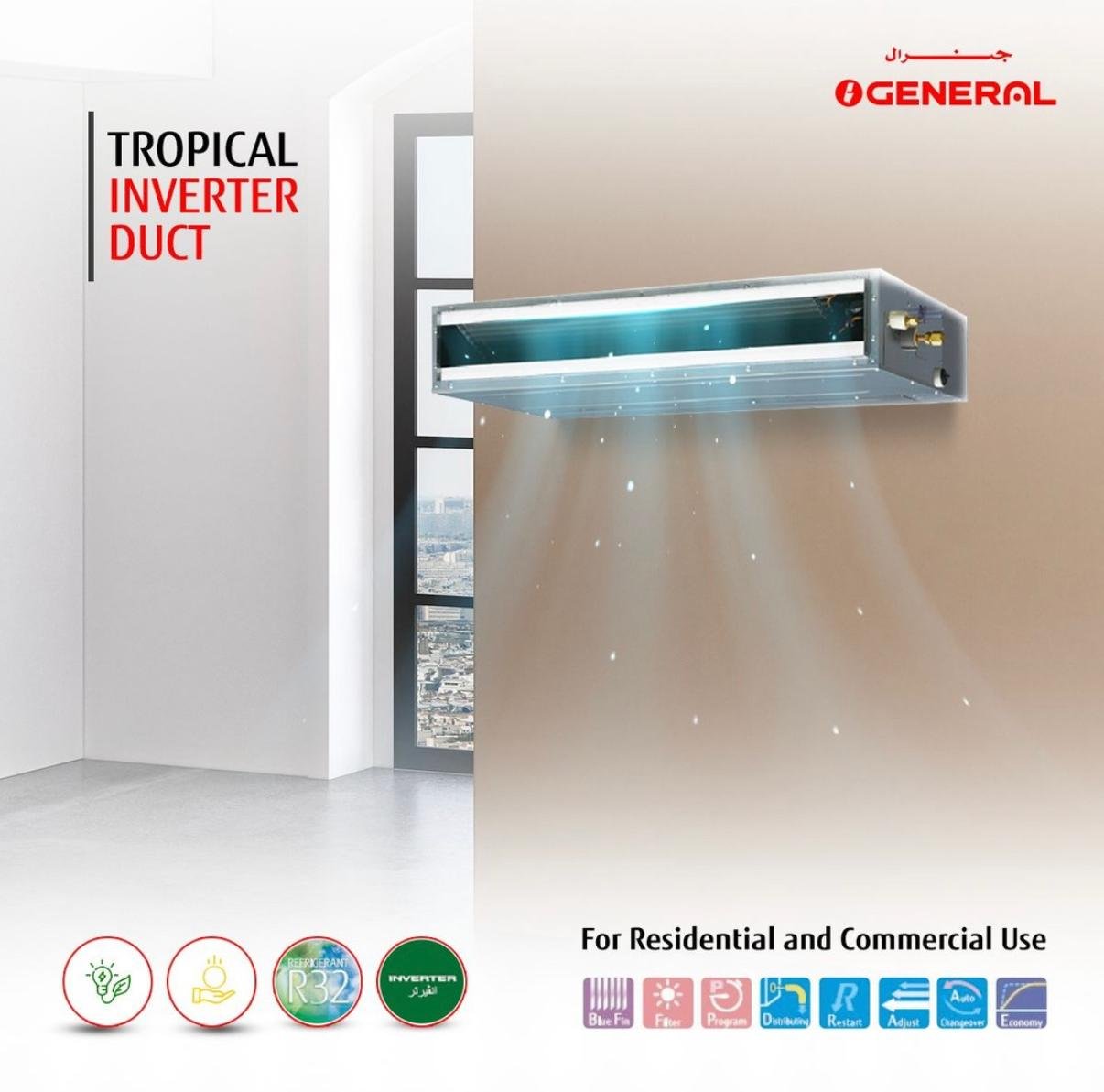
The Role of O General Inverter Ducted Systems in UAE Energy Efficiency
Combining precise ducted AC installation standards with advanced O General AC inverter technology yields maximal energy reduction:
- Variable-Capacity Modulation: O General Inverter ducted compressors automatically scale output down to as low as 25% capacity during night hours or milder seasons, consuming fractionally less power than fixed-speed units.
- Precision Expansion Valves: Electronic Expansion Valves (EEV) constantly meter refrigerant flow based on real-time room heat load, optimizing heat absorption.
- High-Efficiency DC Fan Motors: Brushless DC blower motors in indoor FCUs reduce internal electrical power consumption while maintaining precise air distribution pressure.
4 Actionable Steps for Homeowners to Reduce AC Power Bills
- Perform an Infrared Thermal Leak Audit: Use thermal imaging cameras to inspect false ceilings for cold air leaks coming from uninsulated or damaged duct joints.
- Upgrade to Smart Programmable Thermostats: Install smart climate controllers that automatically raise room setpoints by 2°C to 3°C when living spaces are unoccupied during working hours.
- Set Temperature Controls to 24°C: Setting your thermostat to 24°C instead of 20°C provides ideal indoor comfort while cutting cooling energy consumption by up to 24%.
- Schedule Bi-Annual Professional AC Maintenance: Keep indoor coils, outdoor condensers, and air filters clean to prevent airflow restrictions that cause high power draw.
Start Saving on Your DEWA Utility Bills Today
Optimize your villa or commercial space with high-efficiency O General ducted AC supply and certified installation services. Contact our Dubai energy engineering team today.
Book an Energy Efficiency Audit
Leave a Reply