
Mastering Ducted AC Installation in Dubai: Concealed Fan Coil Units, GI Ductwork & Static Balancing
An in-depth technical exploration of ducted ac engineering, multi-zone airflow distribution, and precision MEP installation protocols designed for luxury residential villas and commercial spaces across the UAE.
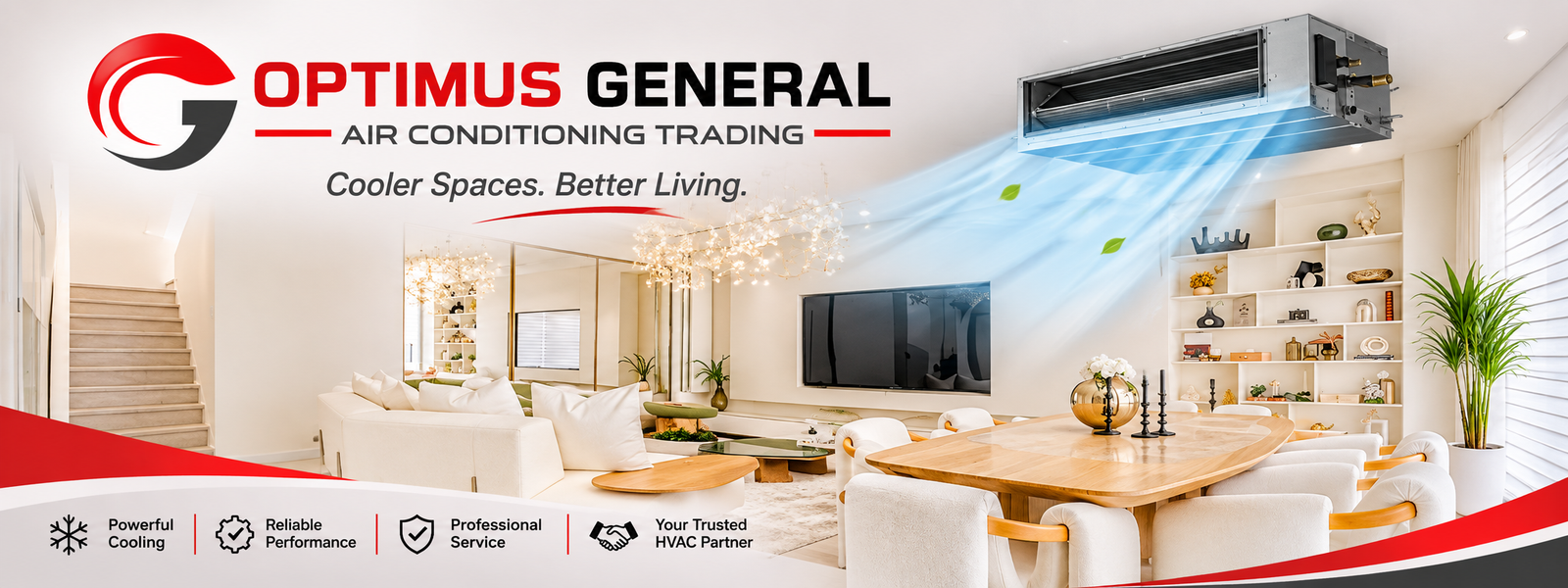
When stepping into a luxurious, contemporary penthouse or a freshly renovated villa in Dubai, the most striking feature of the interior climate control is often what you cannot see. Bulky plastic wall units are entirely absent, replaced instead by clean, minimal architectural ceiling slots that whisper cool, evenly conditioned air into every corner of the room.
Concealed ducted ac systems represent the pinnacle of modern residential and commercial air conditioning design. However, unlike standard plug-and-play split units, a ducted installation is a complex mechanical system comprising hidden fan coil units, custom-fabricated galvanized iron (GI) ductwork, acoustic lining, volume control dampers, and sophisticated static pressure balancing. This technical guide outlines the engineering principles and professional ducted ac installation procedures required to achieve flawless comfort in the demanding climate of the United Arab Emirates.
The Engineering Dynamics of Concealed Ducted AC Systems
A ducted air conditioning setup shifts the heavy machinery away from the occupied living space entirely. The primary indoor air handler—known as the fan coil unit (FCU)—is mounted horizontally within false ceiling cavities, utility voids, or dedicated plant corridors. Conditioned air is then forced through a network of insulated metal ducts to distribute cooling uniformly across multiple rooms.
Mastering this closed-loop aerodynamic system requires balancing three fundamental physical parameters:
1. External Static Pressure (ESP) Management
As air travels through long supply trunk lines, elbows, flexible transitions, and diffuser necks, it encounters frictional resistance. High-static ducted blowers overcome this resistance to ensure that rooms situated at the furthest end of the duct run receive identical cooling velocity as rooms positioned directly adjacent to the FCU.
2. Acoustic Attenuation & Vibration Damping
Because fan motors operate at high RPMs, mechanical vibrations can easily transmit into drywall and false ceiling structures if not properly isolated. Professional installations utilize canvas flexible connectors, spring hangers, and internal acoustic fiberglass lining to absorb sound power before it reaches the living space.
3. Latent Moisture & Condensate Control
Extracting gallons of water vapor daily from humid Dubai air requires precise condensate drainage engineering. Rigid UPVC drain lines must be installed with a continuous gravity fall (at least 1:100 slope), integrated P-traps to prevent sewer gas backflow, and emergency safety float switches.
Step-by-Step Protocol for Professional Ducted AC Installation
Industry statistics indicate that over 65% of air conditioning performance issues in the UAE stem from hurried or incorrect installation practices. Executing a flawless ducted ac installation requires a rigorous, multi-stage engineering sequence:
Phase 1: CAD Duct Routing & Heat Load Audit
Engineers calculate thermal loads based on room dimensions, window glass orientation, and roof insulation, mapping out exact duct paths to eliminate sharp bends and maximize airflow efficiency.
Phase 2: GI Sheet Metal Fabrication & Lining
Galvanized steel sheets (24G/22G) are cut and folded into rectangular trunk lines, lined with high-density thermal insulation to prevent condensation sweat and energy loss.
Phase 3: Rigging, Piping & Nitrogen Brazing
The indoor FCU is hoisted securely on threaded rod vibration hangers. Thick-walled refrigeration copper lines are brazed while purging dry nitrogen gas to prevent internal oxidation scale.
Comparing Ducted AC Systems Against Conventional Split Units
When planning a residential or commercial HVAC layout, understanding how ducted configurations compare against standard wall-mounted splits helps property owners make informed infrastructure investments:
| Evaluation Criteria | Standard Wall-Mounted Split AC | Concealed Ducted AC System |
|---|---|---|
| Interior Aesthetics | Visible plastic housing mounted on room walls | Completely hidden; only minimalist linear ceiling slots visible |
| Air Distribution | Cooled air concentrated near a single wall | Balanced multi-zone distribution across the entire room footprint |
| Acoustic Profile | Fan blower situated directly inside the bedroom | Acoustically isolated inside ceiling voids for silent operation |
| Architectural Integration | Requires wall space with clear clearance paths | Favorable for tight ceiling voids using ultra-slim 240mm chassis |
Ensuring Long-Term Efficiency Through Air Balancing
Once your ducted system is physically installed, the critical final step before ceiling closure is air balancing. Technicians use digital anemometers and balometer hoods to measure actual cubic feet per minute (CFM) output at every individual ceiling diffuser. By adjusting opposing-blade volume control dampers (VCDs) hidden inside the duct branches, airflow is fine-tuned until every room achieves its precise design temperature.
Crucial Maintenance Tip for Ducted AC Owners
Because concealed indoor units draw return air from ceiling grilles, dust and lint accumulate on the internal washable filters over time. Access your ceiling filter maintenance hatches every 3 to 4 weeks to vacuum or rinse the filters, and schedule a professional chemical coil wash and duct sanitization annually to maintain peak indoor air quality.
Frequently Asked Questions About Ducted AC Installation
1. Can a ducted AC system cool different rooms to different temperatures?
Standard ducted systems condition all connected zones simultaneously based on a central thermostat. However, advanced setups can incorporate motorized zone dampers and smart room thermostats to independently control temperatures in individual bedrooms.
2. Will a ducted AC installation reduce my room’s ceiling height significantly?
Modern slim-profile ducted fan coil units feature chassis heights as low as 240 mm (approx. 9.5 inches). When combined with compact ducting layouts, false ceilings only need to drop by about 300 mm in service corridors and perimeter areas.
3. How long does a complete ducted AC installation take for a Dubai villa?
For standard villa retrofits utilizing existing ductwork, replacement takes 2 to 4 working days. New construction projects involving complete GI duct fabrication, wiring, and ceiling coordination typically range from 1 to 2 weeks.
4. What refrigerant is used in modern ducted AC units?
Latest-generation high-efficiency ducted systems utilize environmentally responsible R32 or R410A refrigerants, which offer superior thermodynamic heat transfer and comply fully with UAE green building regulations.
Leave a Reply